Erasmus Short Mobility in Barcelona
From the 17th to the 22nd of July we were in Barcelona to explore the relationships between design, architecture and public space through meetings, urban itineraries and visits to companies and galleries. An immersion that highlighted the role that design plays in the construction of the contemporary city, of which Barcelona represents a multifaceted case study.
«Barcelona is a place rich in history, but it is also a city that continues to build its own identity thanks to those who experience it (and bring it to life) every day. This experience allowed me to discover places that I would hardly have discovered travelling alone, getting in touch with companies, workshops and people who showed me a different way of living and designing.»
– Dixie Espulgar
Our study trip started at Enric Miralles Foundation, where we first came close to the design legacy of the Catalan architect, who passed away prematurely in 2000. The foundation is directed by the architect Benedetta Tagliabue, life and work partner of Miralles and co-founder with him of the EMBT architectural practice.
The following day was dedicated to exploring the urban interventions designed by Miralles-Tagliabue, such as the Santa Caterina Market. An opportunity to observe at close quarters how forms of public space activation, combined with the use of curved shapes and colour, can redesign the vitality of a neighbourhood.
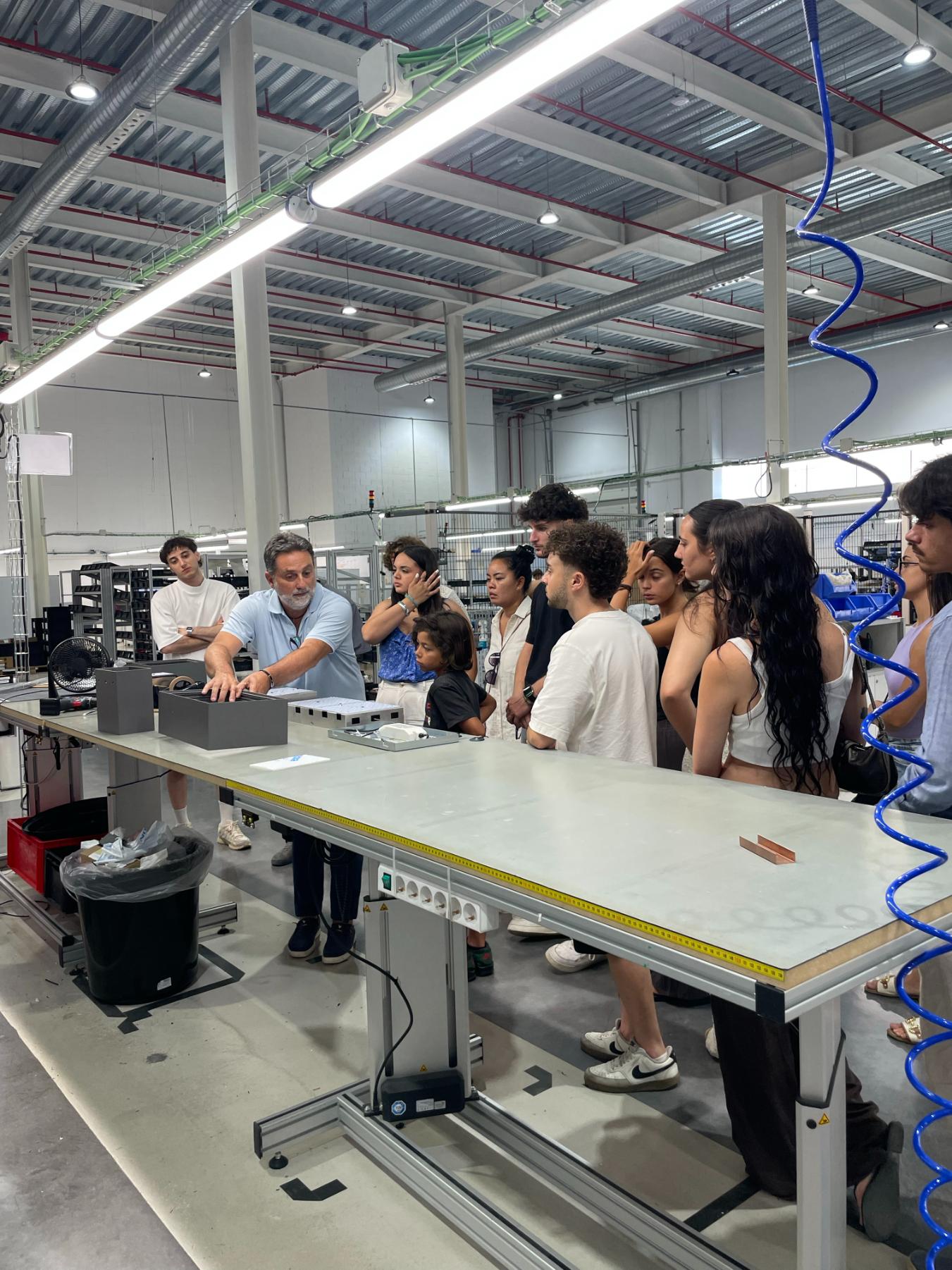
Our focus then shifted from large-scale architecture to product and interior design, with visits to three Spanish companies. Vibia, based in Gavà, is an international lighting brand. Its lamps and lighting systems combine design and functionality. Marco Maragoni Sales Director Laura Grau Garcia The Showroom Manager and Product Training Manager guided us through the showroom and illustrated the various stages of the prototyping process.
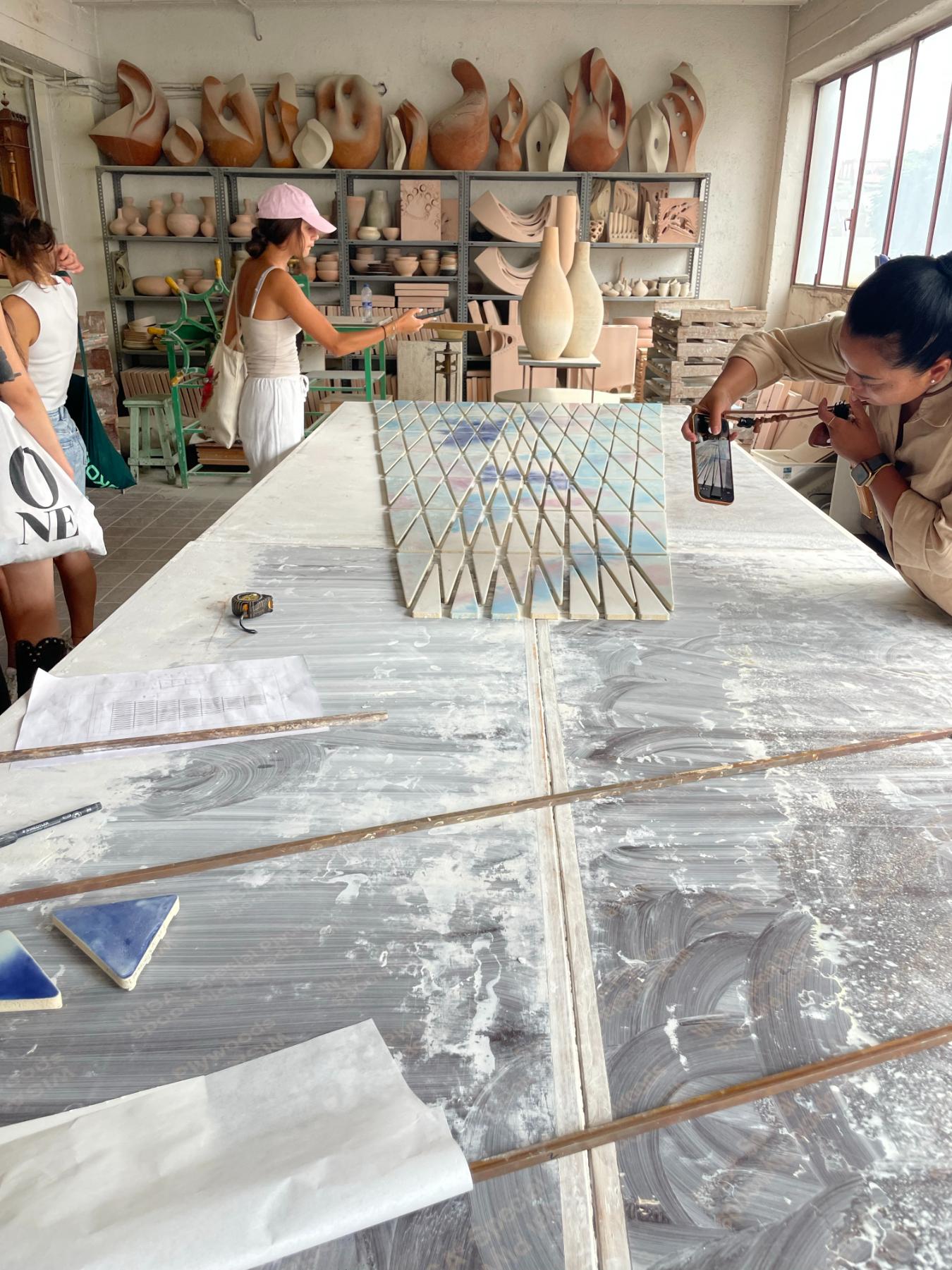
Founded in 1880 in Granollers as a small pottery workshop, Ceràmica Cumella is today a benchmark in the global ceramics landscape, producing wall tiles, decorative elements and custom pieces for designers and architectural projects worldwide. With Toni Cumella we reviewed the company's most significant contributions to the city's architecture, such as the cladding of the Tower of Jesus Christ, the tallest of the Sagrada Família, and the four-armed cross created using the trencadís technique, the mosaic of irregular fragments devised by Antoni Gaudí. The coloured roof of the Mercat de Santa Caterina designed by EMBT is also the work of Toni Cumella, who created a pixelated mosaic inspired by the fruit and vegetables sold inside.
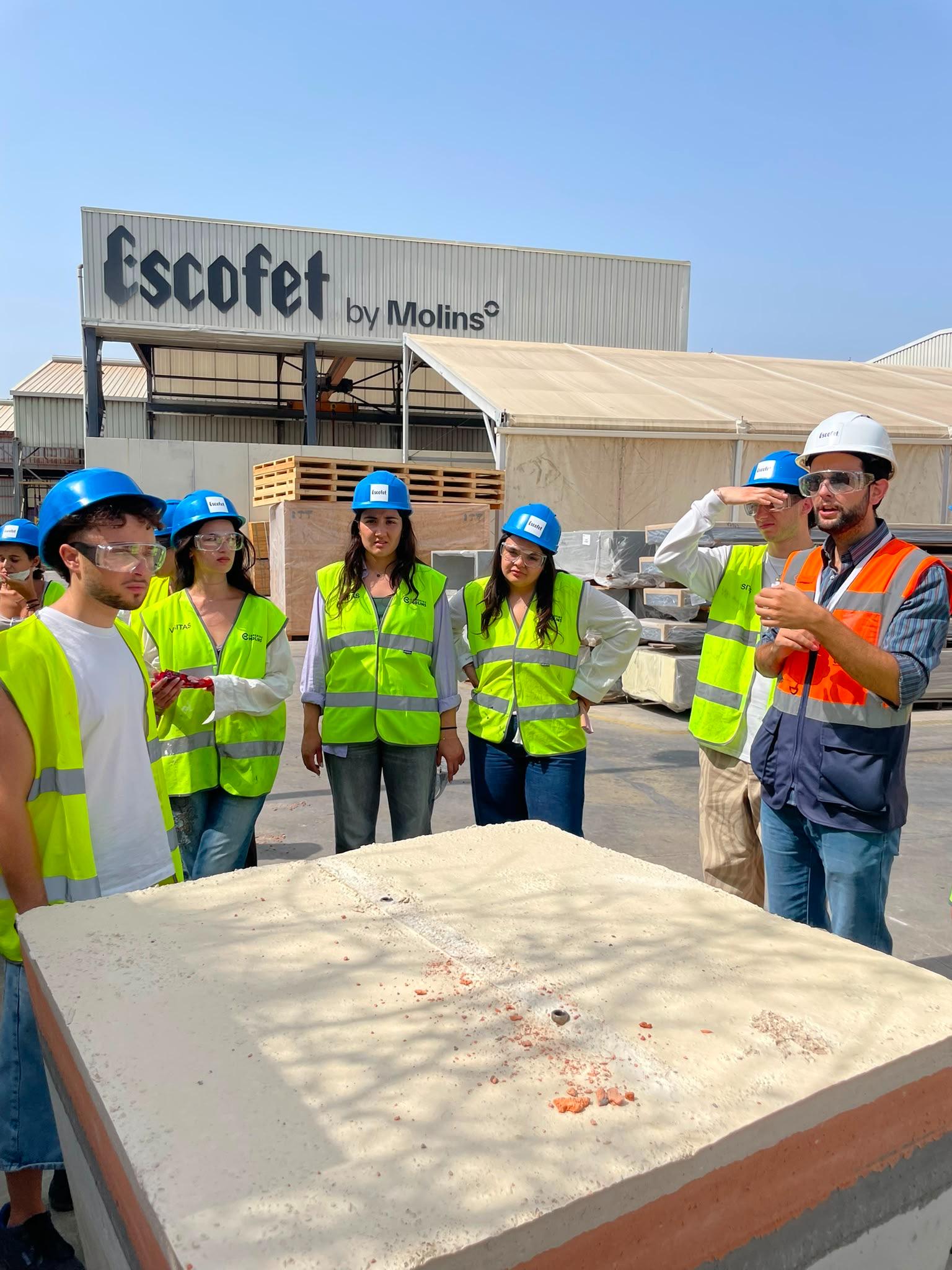
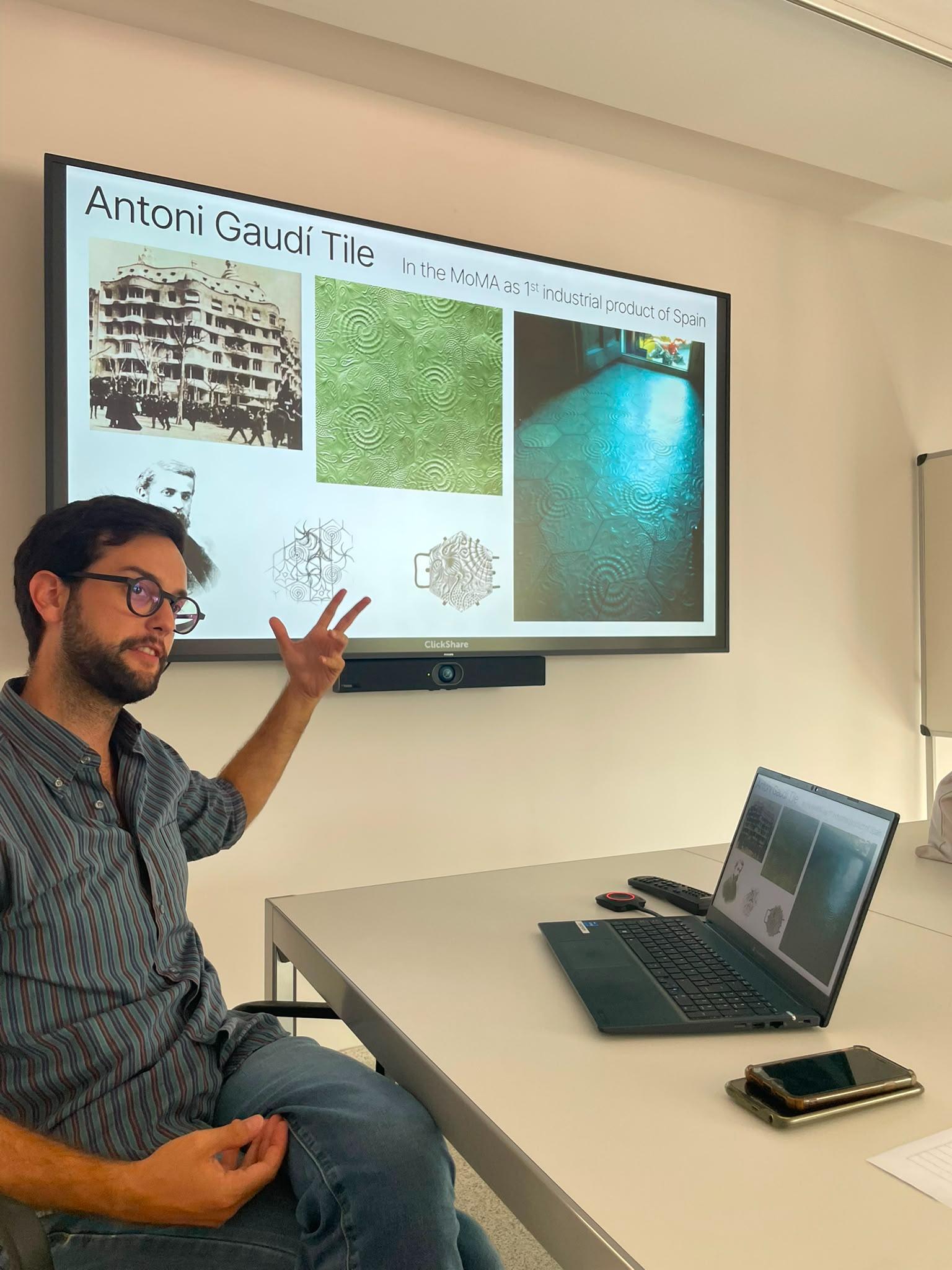
The company visits concluded in Martorell, in the spaces of Escofet, historic company specialising in urban elements and paving, including the encaustic tile. In 1904 Escofet produced the famous Gaudí pavement tile, the hexagonal tile originally designed by Gaudí for Casa Batlló, which was later used instead in the nearby Casa Milà (“la Pedrera”) and, more than a century later, at the request of Barcelona City Council, to repave the pedestrian areas of Passeig de Gràcia. Escofet has also collaborated with EMBT, co-designing the Lungo Mare bench: with its hybrid nature, halfway between sculpture, seating and play, it has revolutionised the concept of urban furniture, becoming one of the Catalan company's best sellers.
Final stop: the Roca Barcelona Gallery, where we visited the installation The Architecture of Virtual Water. Designed for the 2025 Venice Architecture Biennale by Benedetta Tagliabue together with scientist Jampel Dell’Angelo, composer Yeshi Silvano Namkhai and digital artist Ati Sphere, it is a pavilion constructed from recyclable, low-impact materials, designed to be dismantled and reused.
Our study trip ended where we had started: at EMBT Architects, where Benedetta Tagliabue showed us the book Weave Architecture, a monograph on the studio's projects, while Makoto Fukuda, architect and lecturer in Modelling and Exhibition Design at Abadir, retraced the major public works designed during his twenty-year collaboration with the studio, which include precisely the roof of the Santa Caterina market and the aforementioned Lungo Mare bench.
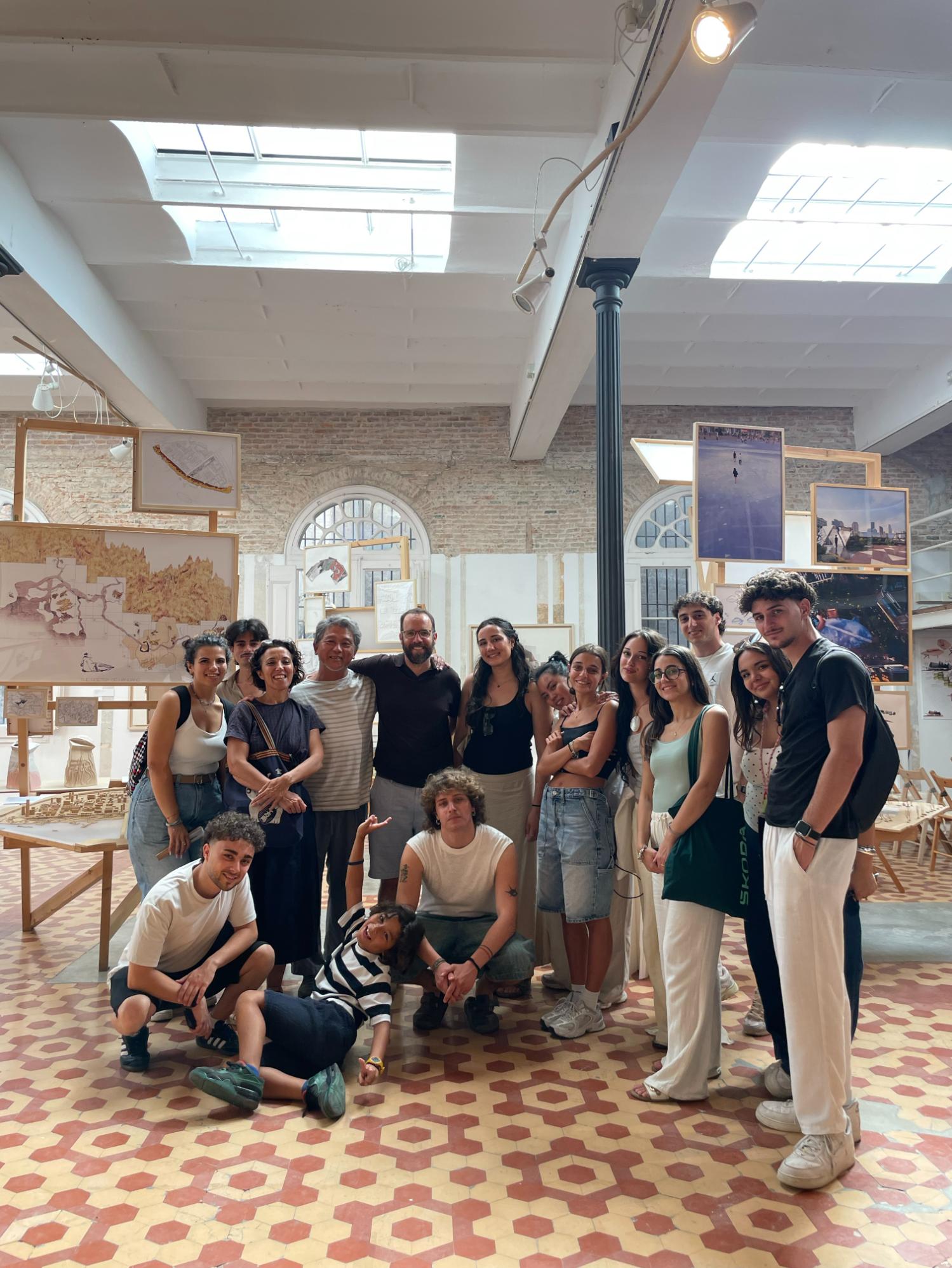
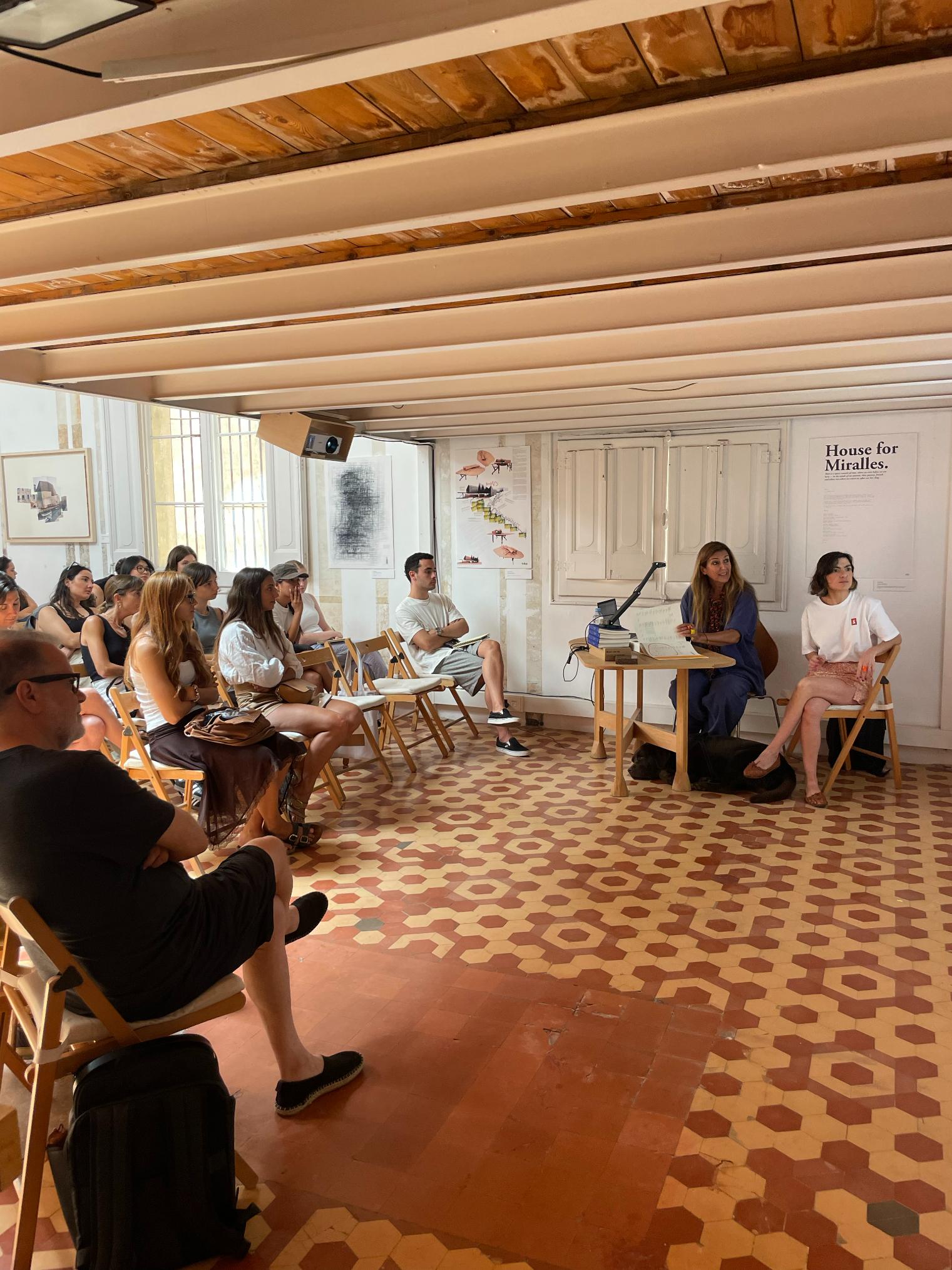
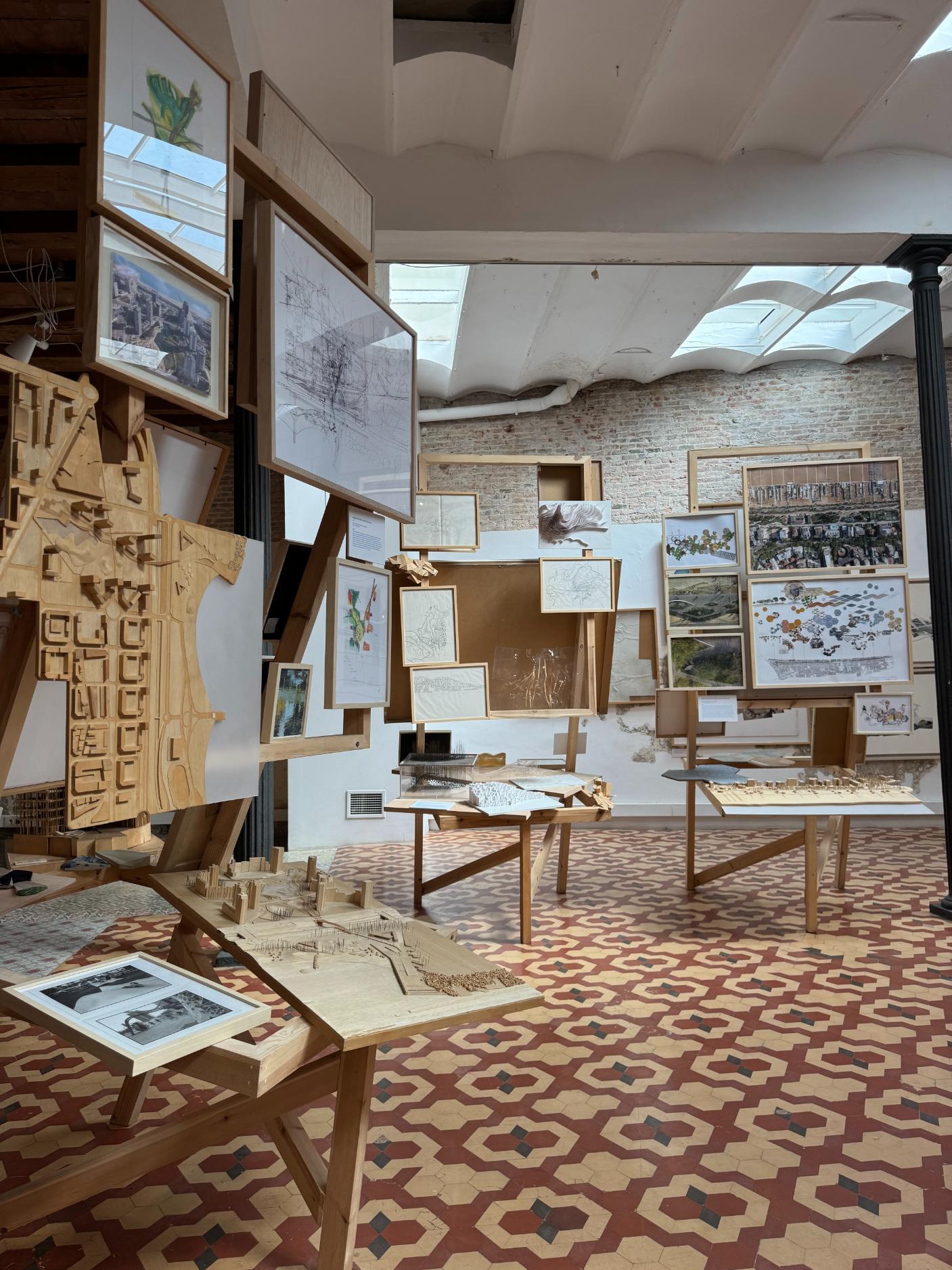
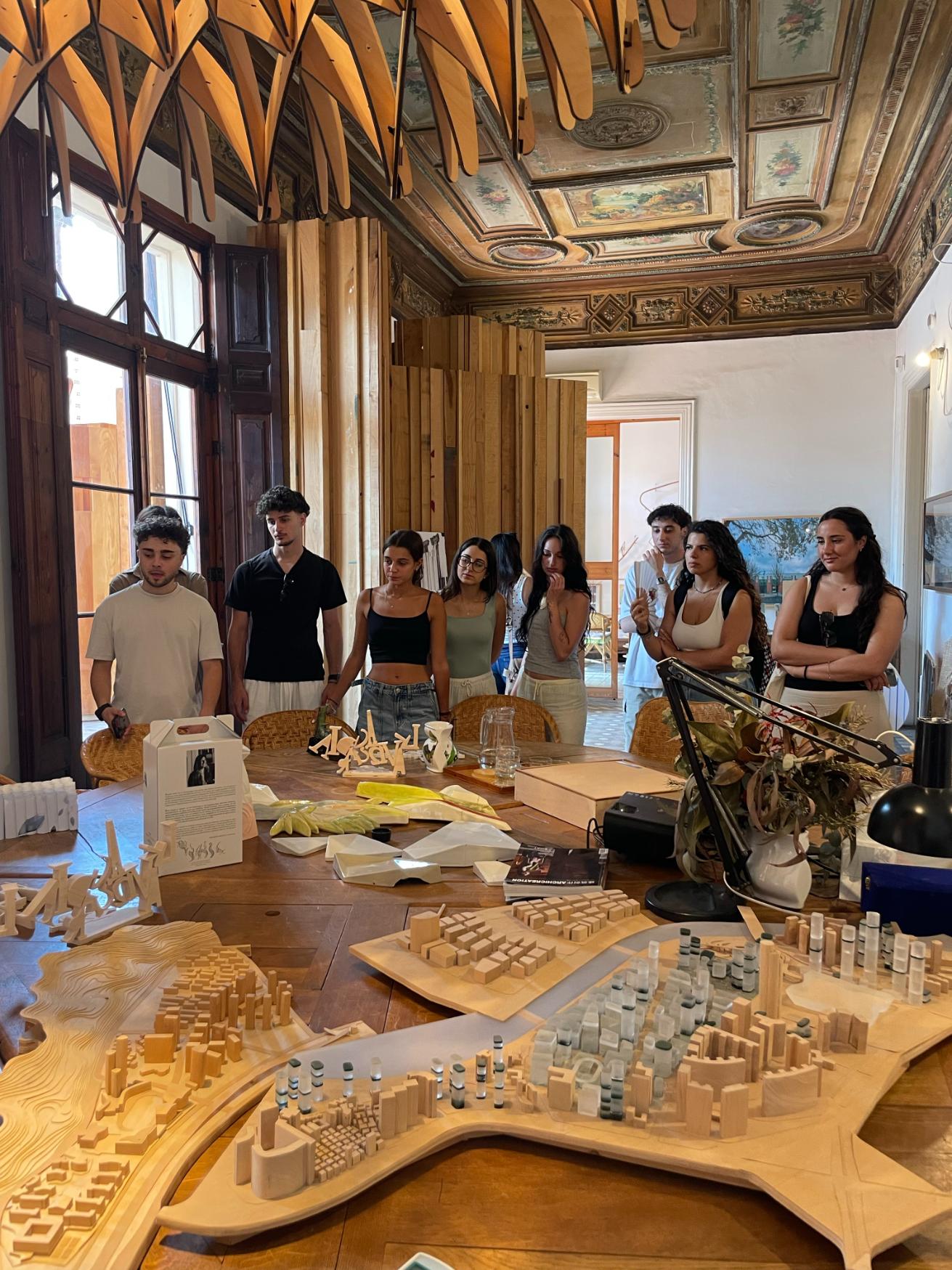
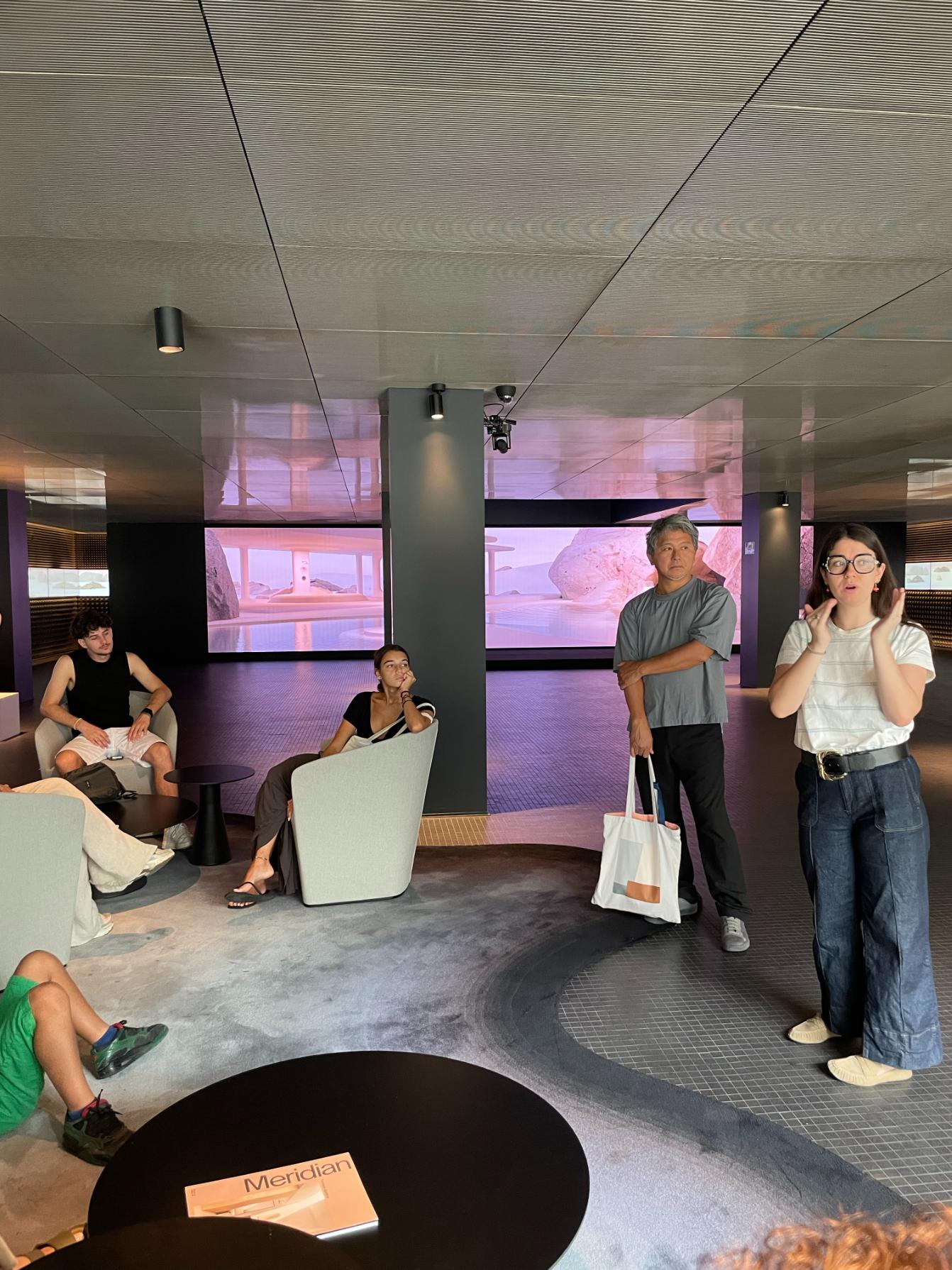
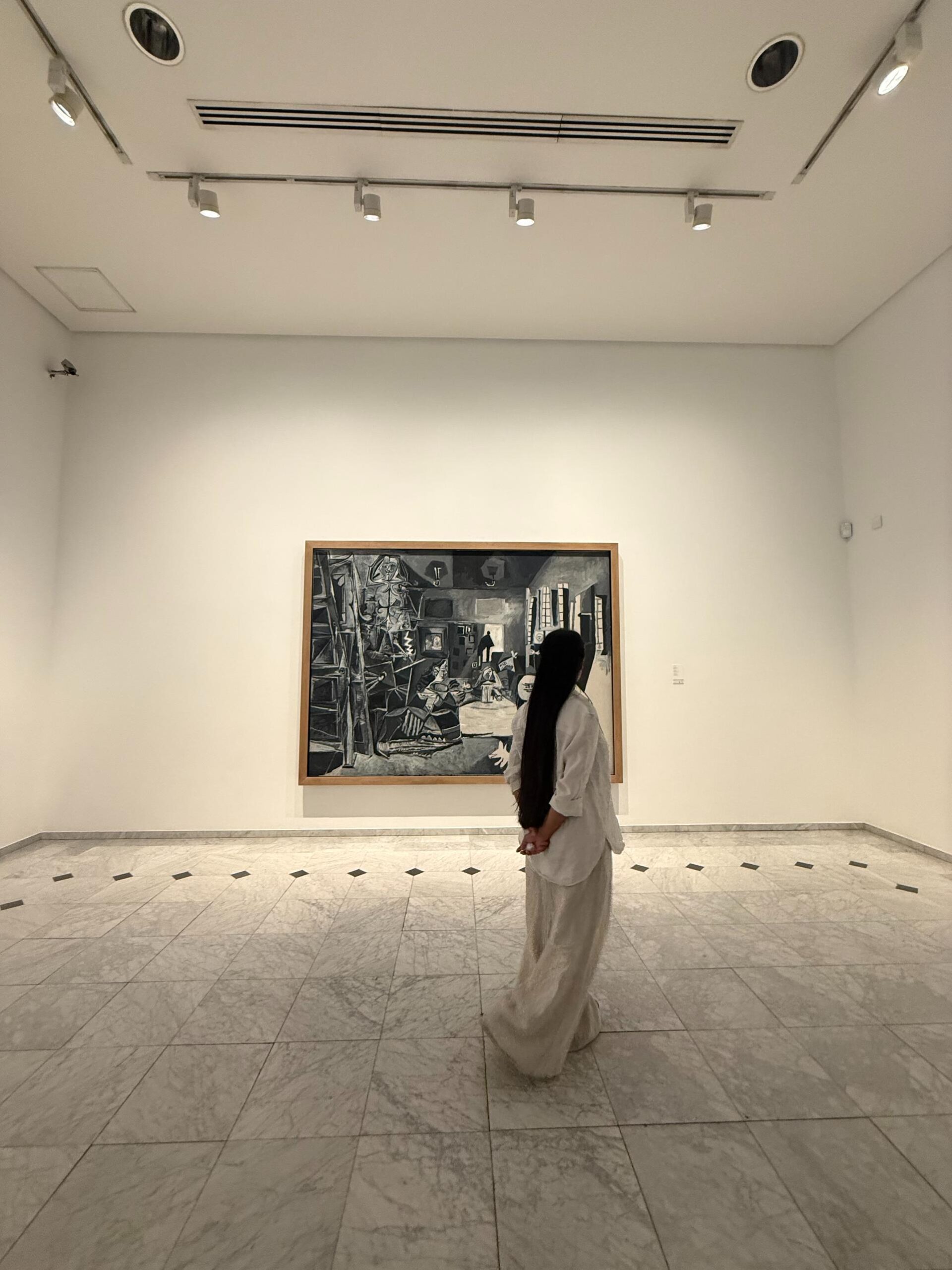

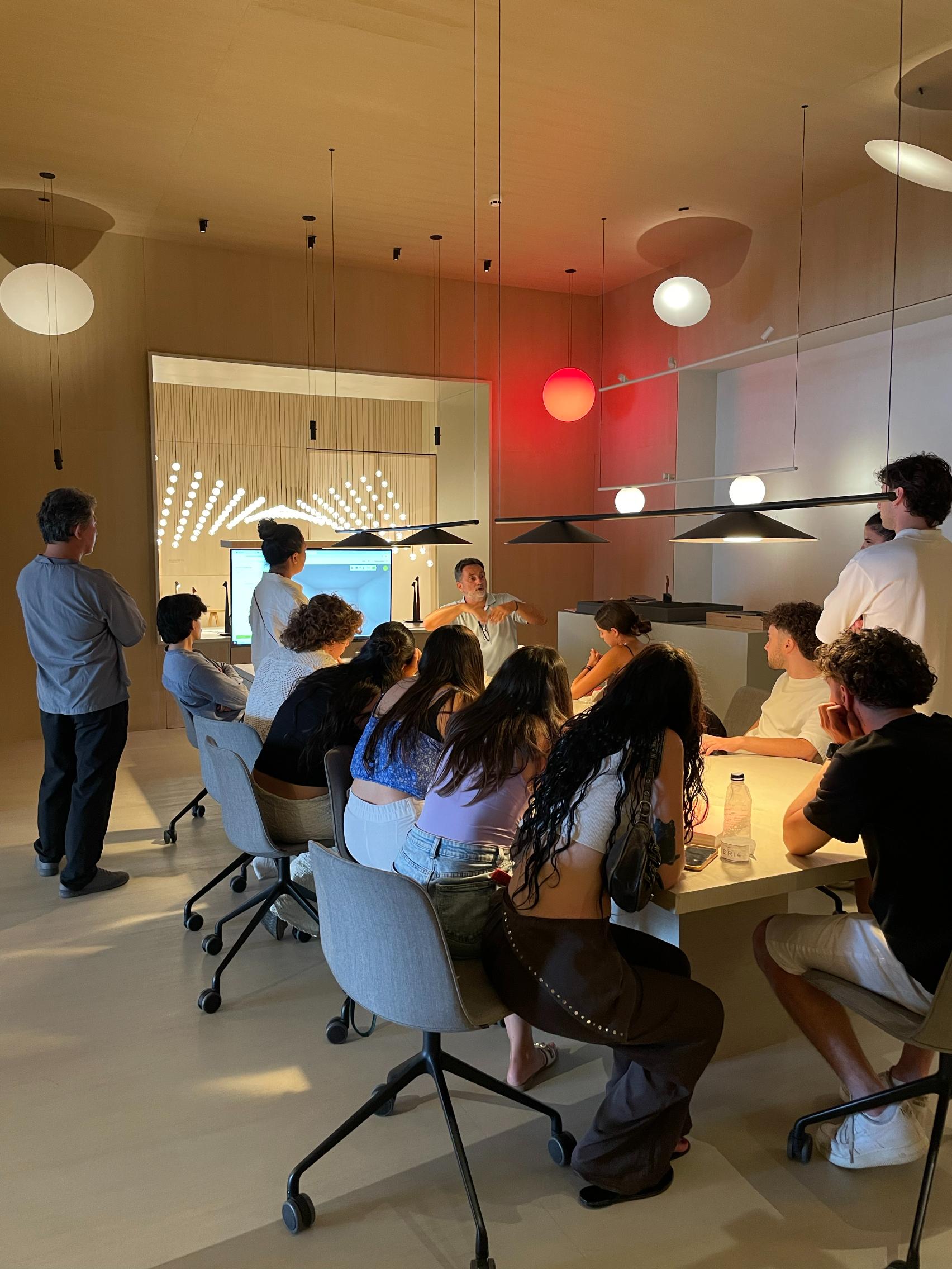
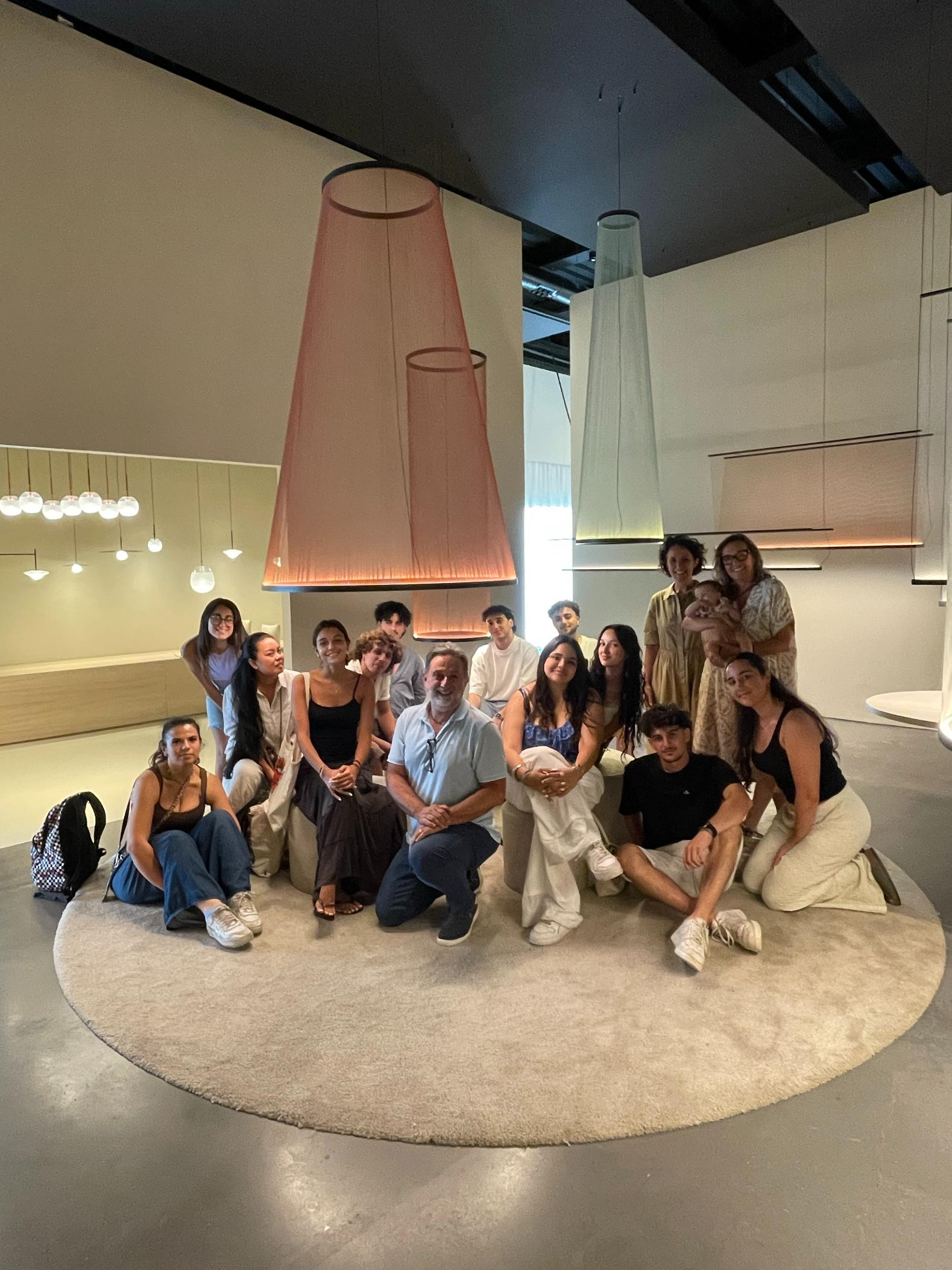
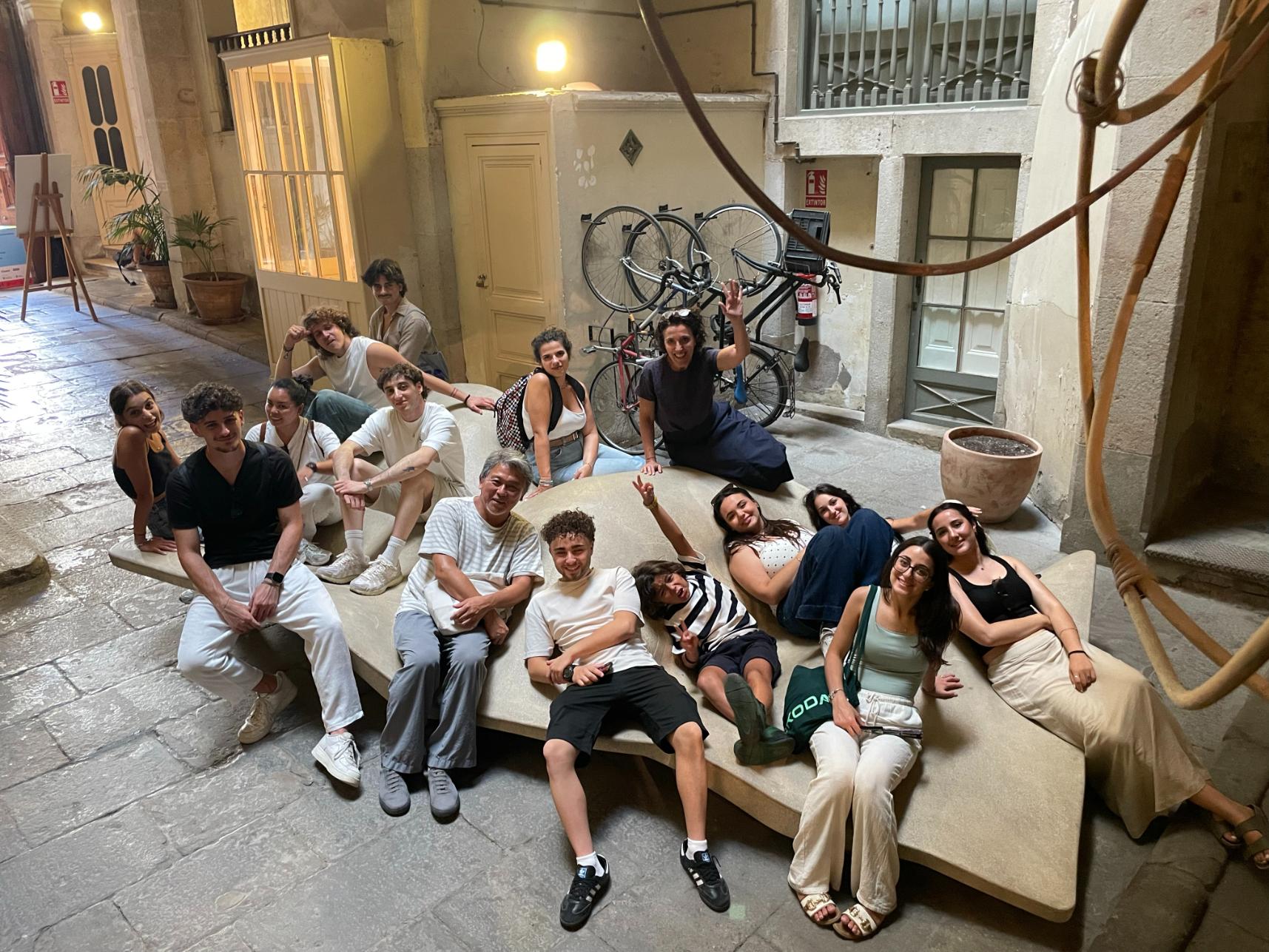
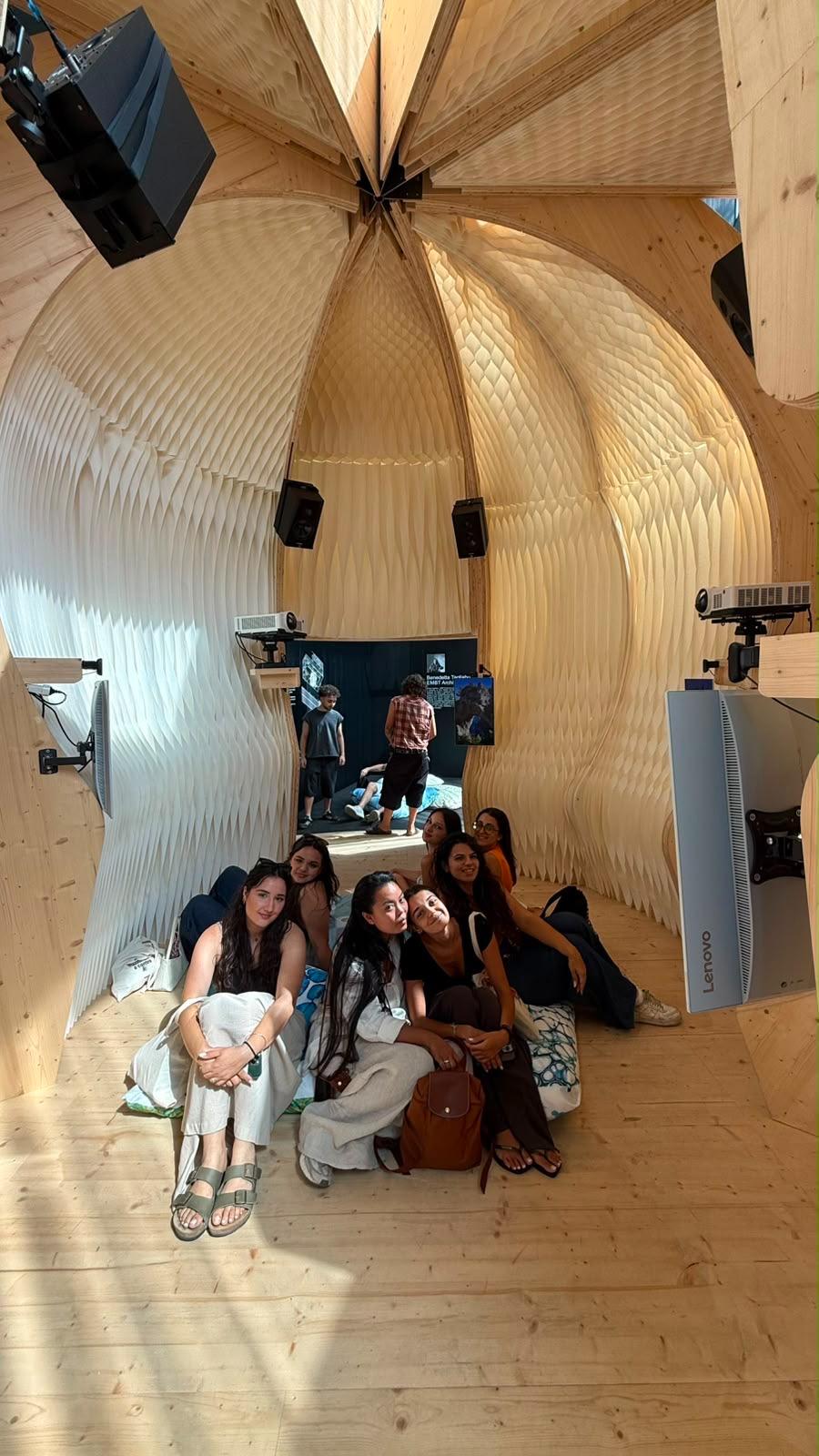
This mobility has been a valuable opportunity to read Barcelona as a laboratory for design experimentation and to understand how design can contribute to the creation of cities that are more attentive to people, uses and contemporary transformations.
«For me, Erasmus means stepping out of the classroom and discovering that design is also learned by watching, listening and making mistakes in another language.»
– Salvatore Sicali
Mobility type
Erasmus Short Mobility
Academic Year
2024–2025
Funded by
Erasmus+ Programme – Key Action 1 – KA131 – 2024 Call – Project No. 2024-1-IT02-KA131-HED-000196470
The following took part
Samuele Chiusa, Melissa Coco, Antonino Di Nicolò, Dixie Espulgar, Alice Incognito, Roberta Magrì, Chiara Mangiarratti, Pierpaolo Privitera, Alice Gaetana Rapisarda, Moazzam Alì Shah, Salvatore Sicali, Zora Zammataro
Discover past mobilities

